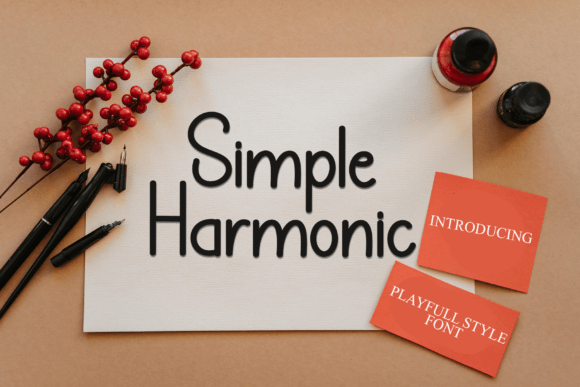
Simple Harmonic: A Playful Display Font for Creative Branding
I recently had the chance to test Simple Harmonic, a display font that caught my eye with its promise of charm and versatility. As a brand designer who often works with small businesses and creative studios, I was curious how this typeface would hold up in real-world applications — from logo drafts to social media assets. After integrating it into several design projects, I found myself returning to it again and again for its balance of playfulness and professionalism.
Simple Harmonic on a Boutique Logo Concept
Let’s start where most branding begins: the logo. I was working on a concept for a local artisanal skincare brand when I first tried Simple Harmonic. The client wanted something warm, inviting, yet modern enough to stand out in a crowded market. Traditional serif fonts felt too formal, while many sans serifs lacked personality. That’s when I opened the Fonts folder and pulled in Simple Harmonic.
The rounded, clean letterforms gave the logo a softness that matched the product’s natural ingredients, but the slight contrast between strokes added a touch of sophistication. It didn’t scream “playful” like some other display fonts, but there was an underlying cheeriness that made the brand feel approachable. In short, Simple Harmonic hit just the right tone for a boutique identity project.
Using Simple Harmonic in Brand Boards and Visual Systems
In building out the visual system for that same skincare brand, I used Simple Harmonic across multiple touchpoints. On a brand board, it paired beautifully with muted pastel tones and organic textures. Its character set includes subtle alternates that helped differentiate key phrases without feeling cluttered or gimmicky.
What stood out was how Simple Harmonic maintained a cohesive look whether it was used for a tagline, a packaging label, or a social media post. It’s not a font that demands attention through size alone — instead, it earns it through thoughtful detail and a refined curve language. This makes it ideal for branding systems that need consistency but also warmth.
Simple Harmonic in Packaging Mockups
For a hand-poured candle line, I placed Simple Harmonic on mockups of glass jars and wooden boxes. At larger sizes, it looked elegant and inviting. But even at smaller scales on product labels, the font held up well — especially when compared to more ornate display fonts that tend to get lost in texture-heavy designs. The clean lines of Simple Harmonic ensured legibility without sacrificing style.
One thing I noticed is that Simple Harmonic really shines when used as a secondary accent type. For example, pairing it with a minimalist sans serif for body text allowed it to pop without overwhelming the layout. This flexibility is rare in Fonts that lean toward one aesthetic over another.
Simple Harmonic in Social Media Layouts and Web Headers
Social media layouts are all about quick visual impact, and Simple Harmonic delivered exactly that. I tested it on Instagram posts, event announcements, and promotional banners. The font performed best when used sparingly — for headlines, call-to-action buttons, and quote graphics. Its rounded edges brought a friendly, conversational vibe to the feed, which is great for lifestyle brands or casual entrepreneurs looking to build connection through their visuals.
On a website hero section, I found that Simple Harmonic worked well when used as a headline against a solid background. However, when layered over complex imagery, the curves sometimes got muddied. My advice? Keep the background simple if you're using Simple Harmonic in large-scale web headers. It's a display font meant to be seen clearly, not hidden behind design chaos.
Font Pairing Tips for Simple Harmonic
When experimenting with Simple Harmonic, I found that pairing it with a classic serif font created a nice contrast between modernity and tradition. Think something like Lora or Merriweather to ground the playful nature of Simple Harmonic with a sense of reliability. Alternatively, matching it with a sleek sans serif like Raleway or Montserrat helped maintain a clean, contemporary feel.
If you’re going for a more whimsical vibe, try combining Simple Harmonic with a script or handwritten font. Just be careful not to let the two compete visually. Use Simple Harmonic for the main message and reserve the script for accents or signatures.
Simple Harmonic for Invitations and Editorial Design
I also tested Simple Harmonic on a series of wedding invitations and event flyers. Its gentle curves and slightly elevated x-height made it easy to read while still feeling special. Unlike some decorative Fonts, it didn’t require excessive spacing or formatting tricks to make it work in print.
In editorial design, such as blog headers or magazine covers, Simple Harmonic proved itself to be a strong choice for short phrases. It added just the right amount of charm to headings without making the overall design feel too busy. Again, it’s a display font — so use it smartly and save it for impactful moments rather than long-form content.
When Not to Use Simple Harmonic
While Simple Harmonic has a lot going for it, it’s not a one-size-fits-all solution. I noticed that it struggled in body copy settings. Even in digital formats, using it for extended paragraphs reduced readability due to its stylized curves and lack of sharp corners for clarity. So if your project requires dense text blocks, consider reserving Simple Harmonic for titles, logos, or quotes.
Additionally, it may not be the best fit for formal corporate identities or legal documents. Though it can be used in business cards, it’s better suited for creative professionals or lifestyle brands rather than financial institutions or law firms. Always match the font to the brand’s voice and audience expectations.
Testing Simple Harmonic Before Finalizing Client Work
Before recommending Simple Harmonic for a client project, I always do a few quick tests. First, I place it on a white background at different sizes to see how it behaves. Then, I overlay it onto sample textures and colors to check for legibility. Finally, I create a mock-up of the full brand application — including logo, packaging, and social media — to ensure it maintains visual harmony across platforms.
My rule of thumb: if the typeface feels good in context and doesn’t compromise clarity, it’s worth considering. Simple Harmonic passed each of these checks with flying colors, especially in short phrase usage and visual hierarchy setups.
Commercial Licensing and Practical Considerations
Like any professional Fonts, it’s important to review the licensing agreement before using Simple Harmonic in commercial work. If you plan to use it in brand identity materials, packaging, or print-on-demand products, make sure the license supports those uses. Some free display fonts have restrictions that could limit your ability to sell merchandise or launch a website.
Ideally, invest in a premium version that allows for unlimited use across digital and print mediums. This ensures you won’t run into issues later when scaling your design work or handing off files to developers or printers.
Final Takeaway: A Thoughtful Choice for Creative Projects
Simple Harmonic isn’t trying to be everything — and that’s its strength. As a display font, it brings a unique blend of charm and professionalism to branding projects. Whether you're designing a coffee shop logo, a bakery packaging suite, or a handmade shop identity, Simple Harmonic adds that extra layer of personality without becoming distracting.
It’s the kind of Fonts that makes you rethink your usual go-tos. If you're working with clients who want to stand out in a warm, friendly way, give Simple Harmonic a try. Test it in your next project, and you might just find yourself reaching for it again and again — especially when you need a touch of elegance with a hint of playfulness.